| Region | Southern Africa |
| Capital | |
| Country | |
| Economy | Stable and influential in the region |
| Ethnic Groups | |
| Notable Feature | Unique federalist political system |
| Previous Status | South African colony |
| Political System | Federal with semi-autonomous states |
| Gained Independence | 1980s |
The Federated States of Namibia is a country located in southwestern Africa, bordered by the Atlantic Ocean, Angola, Botswana, and South Africa. A former South African colony, Namibia gained its independence in a negotiated settlement in 1988 after decades of political struggle. It is now a federal republic composed of 14 semiautonomous states, each with their own government, legislature, and ethnic majority population.
Namibia was first colonized by the Union of South Africa in the early 20th century, following the dissolution of the German Empire's German South-West Africa colony. South Africa administered the territory as a League of Nations mandate until 1946, when it unilaterally incorporated Namibia as a fifth province.
Under South African rule, Namibia's diverse ethnic groups, including the Ovambo, Herero, Nama, and Afrikaner populations, were subjected to a policy of apartheid segregation similar to that imposed within South Africa itself. This system granted political and economic privileges to the white Afrikaner minority while disenfranchising the Black African majority.
In the 1960s, an independence movement arose among Namibia's various ethnic and regional groups, rejecting the centralized control of Pretoria. After years of negotiations and political pressure, South Africa agreed to grant Namibia a new federal constitution in 1978, establishing 14 semiautonomous states with their own elected governments and legislatures.
This federalist system, which gave significant autonomy to Namibia's diverse regions, helped pave the way for a peaceful negotiated independence in 1988. After a protracted transition process, Namibia officially became the Federated States of Namibia, a sovereign republic.
Namibia has a population of around 2.5 million people, composed of several major ethnic groups. The largest are the Ovambo (around 50% of the population), followed by the Nama, Herero, Afrikaner, and smaller groups like the San and Himba.
The country's official languages are Afrikaans, English, and the various Bantu and Khoikhoi languages native to each state. While primarily Christian, traditional African religions and customs also remain an important part of Namibian culture, which is celebrated through music, art, and folklore.
Since independence, Namibia has developed a stable parliamentary democracy with regular elections. Political power is divided between the federal government and the state legislatures, which have autonomy over issues like education, healthcare, and natural resource management.
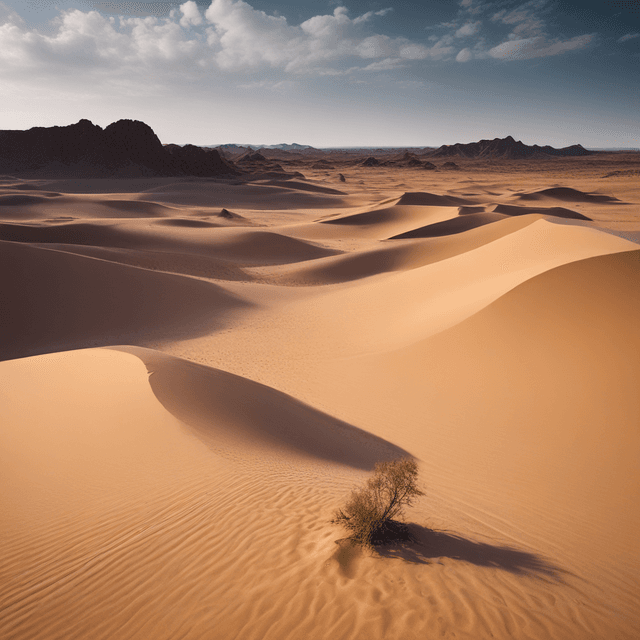
Economically, Namibia has a market-based economy centered on the export of minerals (especially diamonds, uranium, and copper), livestock, and fish. It also has a growing tourism industry showcasing the country's dramatic desert landscapes and wildlife. However, economic inequality and unemployment remain significant challenges.
Namibia plays an influential role in regional affairs, using its position as a stable, multiracial democracy to mediate conflicts and promote development in southern Africa. It is a member of the Southern African Development Community and maintains close ties with other former African colonies like South Africa, Angola, and Botswana.
